Languages
 DE
DE

Software is rarely developed just once and then operated without further changes. In practice, new requirements constantly arise, bugs are fixed, interfaces are adapted, components are replaced, or existing features are expanded. Each of these changes can be necessary and beneficial. At the same time, every change carries a risk: new bugs may unintentionally arise in software components that have already been tested.
This is exactly where regression testing comes in. It verifies whether existing functions continue to work correctly after a change. This makes it a central component of professional software quality.
Regression tests are repeat tests used to retest functions that have already been tested. They are always used when software has been modified: after a bug fix, after the implementation of a new feature, after refactoring, after an interface change, or after the integration of new components. Their purpose is to answer the question: Does what has worked so far still work after the change?
This question is of central importance in software development. After all, errors do not arise only where changes are actively made. A small adjustment in a library, an interface, or a configuration can affect functions that do not appear to be affected at first glance. Without systematic regression testing, such unintended effects often remain undetected for an extended period of time.
The larger a software system becomes, the more existing functionality must be validated. With each release, the number of test cases, variants, and dependencies also grows. At the same time, development and release cycles are shortening in many projects. Teams are expected to deliver faster, integrate more regularly, and roll out changes sooner.
This creates a structural problem: the scope of the necessary regression tests grows, while the available testing time often decreases.
In small projects, regression tests can sometimes still be performed manually. With more complex systems, however, this quickly becomes uneconomical. It becomes particularly challenging when multiple platforms, product variants, hardware versions, operating systems, or configurations must be taken into account. In such cases, the testing effort multiplies.
In practice, this often leads to compromises. Testing teams prioritize particularly critical test cases, omit less relevant scenarios, or test only the areas that appear to be directly affected by a change. This approach is understandable but risky. After all, regressions do not always occur where you expect them to.
The real bottleneck, therefore, lies not only in the number of tests, but in the question of how regularly, thoroughly and reproducibly they can be performed.
Manual testing remains important. It is indispensable when evaluating new features in an exploratory manner, examining complex usage scenarios, or testing processes that are difficult to automate. However, it is only of limited use for recurring regression testing.
The reason is simple: regression tests must be repeated frequently. After every relevant change, after every build or at the latest before every release, it should be verified whether existing features have been affected. If this process is carried out manually, it quickly becomes very time-consuming.
Furthermore, the likelihood of errors increases with each repetition. Monotonous manual test steps are time-consuming and inefficient. This creates the risk that regression tests will be shortened or postponed due to time constraints. That is precisely when they lose their effectiveness as a quality assurance measure.
Manual regression tests are therefore not a sufficient strategy for modern development processes. They should be used specifically where human judgment is indispensable, such as when evaluating usability or visual aspects. Recurring, standardized, and stable tests, on the other hand, are particularly well-suited for automation, as they can be performed efficiently, consistently, and with minimal manual effort.
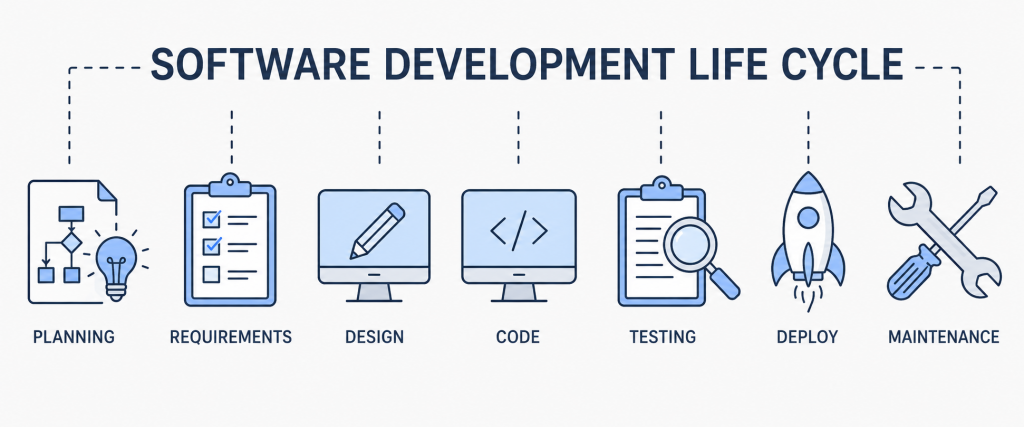
Automated regression tests are reproducible, efficient, and can be run on a regular basis. They can be triggered after code changes, builds, integration steps, or before releases. This provides development and testing teams with significantly faster feedback on whether existing features continue to function correctly.
The key advantage lies not only in speed. Automated regression tests establish a solid testing foundation. They repeatedly execute test cases under comparable conditions and document the results in a traceable manner. This allows deviations to be identified and analyzed more quickly.
However, it is important to note that automation is not an end in itself. Not every test case is suitable for automation. Test cases that are particularly useful are those that are run regularly, verify stable processes, and validate business-critical, security-related, or quality-critical functions.
A good automated regression test is understandable, maintainable and meaningful. It should not only detect errors but also help to quickly pinpoint their cause. Only then can it make a genuine contribution to quality assurance and provide sustainable support for the development process.
The successful implementation of automated regression testing doesn’t start with a tool, but with a clear testing strategy. Companies must first define which functions need to be tested regularly and which risks are particularly critical as a result of changes.
The following guiding questions can help:
These questions form the basis for a prioritized regression test suite. It forms the core of automated testing. The goal is not to automate as many tests as possible, but to automate the right tests.
Maintainability is equally important. Software changes, and with it, test cases, test data, and test environments also change. If automated tests are not maintained, they lose their validity. They generate false positives and are thus ignored or unnecessarily block development processes.
That is why automated regression tests should be reviewed regularly. Outdated test cases must be updated or removed. New critical features should be added to the test suite.
When used correctly, automated regression tests offer clear practical benefits. They not only reduce manual effort but also improve the manageability of the entire development process.
The most important advantages include:
Above all, automated regression testing builds confidence in changes. Teams can develop software in a more targeted manner because they can quickly determine whether existing features remain stable. This not only improves quality but also enhances planning reliability.
For development leads and test managers, this means that regression testing transforms from a recurring source of effort into a reliable quality tool.
The more frequently software is changed, the more important systematic regression testing becomes. It ensures that new features, bug fixes, or technical adjustments do not unintentionally compromise existing functionality.
Manual regression testing is no longer sufficient for this in many projects. It is time-consuming, difficult to scale, and only reproducible to a limited extent. Automated regression testing offers an effective solution here. It enables regular, traceable, and efficient testing of existing functions.
However, a structured approach is crucial. Successful regression test automation is based on a clear test strategy, appropriate test cases, stable test environments, and continuous maintenance.
ITPower Solutions helps companies analyze existing test processes, identify suitable regression test cases, and set up automated test environments. The focus is not on automation for automation’s sake, but on reliable software quality amid growing system complexity and frequent changes.

I am your sales representative and will be happy to advise you on all questions relating to our services and products! Get in touch or simply make an appointment for a free consultation call.
Sebastian Stritz
E-Mail: sebastian.stritz@itpower.de
Phone: +49 (0)30 6098501-17